News detail
From Military to Civil: How CRPA Antennas Counter GNSS Jamming and Spoofing
Global navigation satellite system (GNSS) signals face an escalating threat from radio-frequency interference (RFI) — both intentional (jamming, spoofing, meaconing) and unintentional. One technology once reserved for authorized military users is now moving into the civil market: the controlled reception pattern antenna (CRPA).
What CRPA does
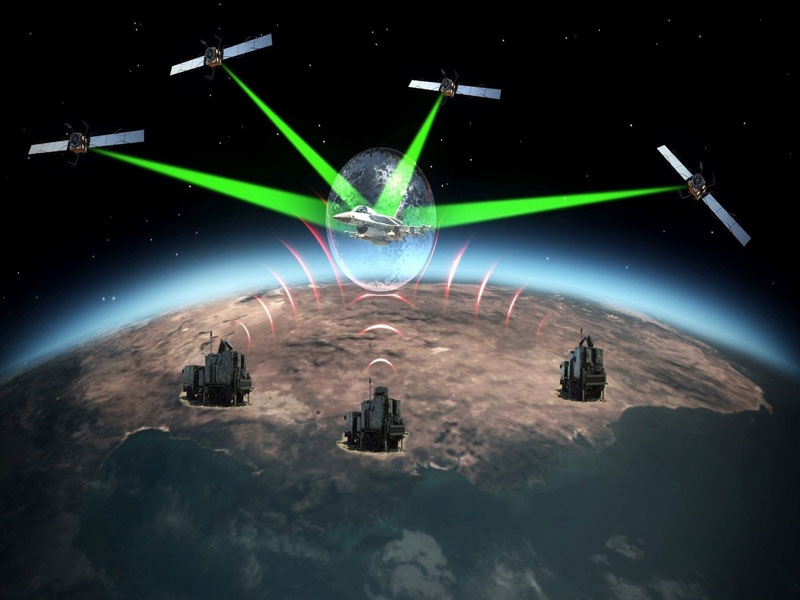
CRPA is a multi-element “smart antenna.” Its individual elements are independently controlled, allowing the system to detect interference and reshape its reception pattern in real time — forming nulls toward jammers while beam-steering gain toward genuine satellite signals. Minimum variance distortionless response (MVDR) is among the processing techniques commonly used.
Since entering the civil market around 2015, CRPA has been seen as a key way to strengthen GNSS resiliency in aviation, critical infrastructure, autonomous vehicles and drones, and heavy-duty freight monitoring. Receivers in sensitive roles — such as Galileo Public Regulated Service (PRS) receivers and Open Service (OS) receivers aboard autonomous platforms — are expected to adopt such interference-rejecting capability.
Testing is the bottleneck
CRPA systems must be thoroughly validated before deployment. Key test parameters include antenna element characterization, system power and carrier-phase calibration, the number of frequencies and constellations, and signal fidelity. Phase alignment across the test bench must hold below 5 picoseconds for the antenna to reject undesired signals effectively.
Testing methods also carry trade-offs: over-the-air (OTA) testing in anechoic chambers is limited to tens of minutes of scenario validity, while controlled-environment simulation offers longer, more flexible scenarios. Record-and-playback testing must handle extreme power differences between jammer and receiver, and multi-channel hybrid tests demand tight phase coherence across antenna channels.
What’s next
Future GNSS receiver architectures will integrate antennas and receivers more deeply, alongside broader PNT sensor fusion — driving miniaturization and system-on-chip (SoC) innovation. CRPA implementations are emerging in three forms — RF-layer, pre-correlation-layer, and post-correlation-layer — with next-generation designs likely combining them. Meanwhile, new signal authentication schemes, from Galileo’s OSNMA to the proposed GPS CHIMERA on NTS-3, will add further demands on testing.
With its dynamic adaptability to interference, CRPA is positioned as a practical and effective anti-jamming, anti-spoofing solution for the future of GNSS.
Creative Ideas
Are we in agreeance cross functi
onal teams enable out
Super Safety
Are we in agreeance cross functi
onal teams enable out
In Time Delivery
Are we in agreeance cross functi
onal teams enable out
24/7 Support
Are we in agreeance cross functi
onal teams enable out

Get Price
Please Leave your message you want to know! We will respond to your inquiry within 24 hours!